Best Tips on How to Choose Video Editing Service for Brands
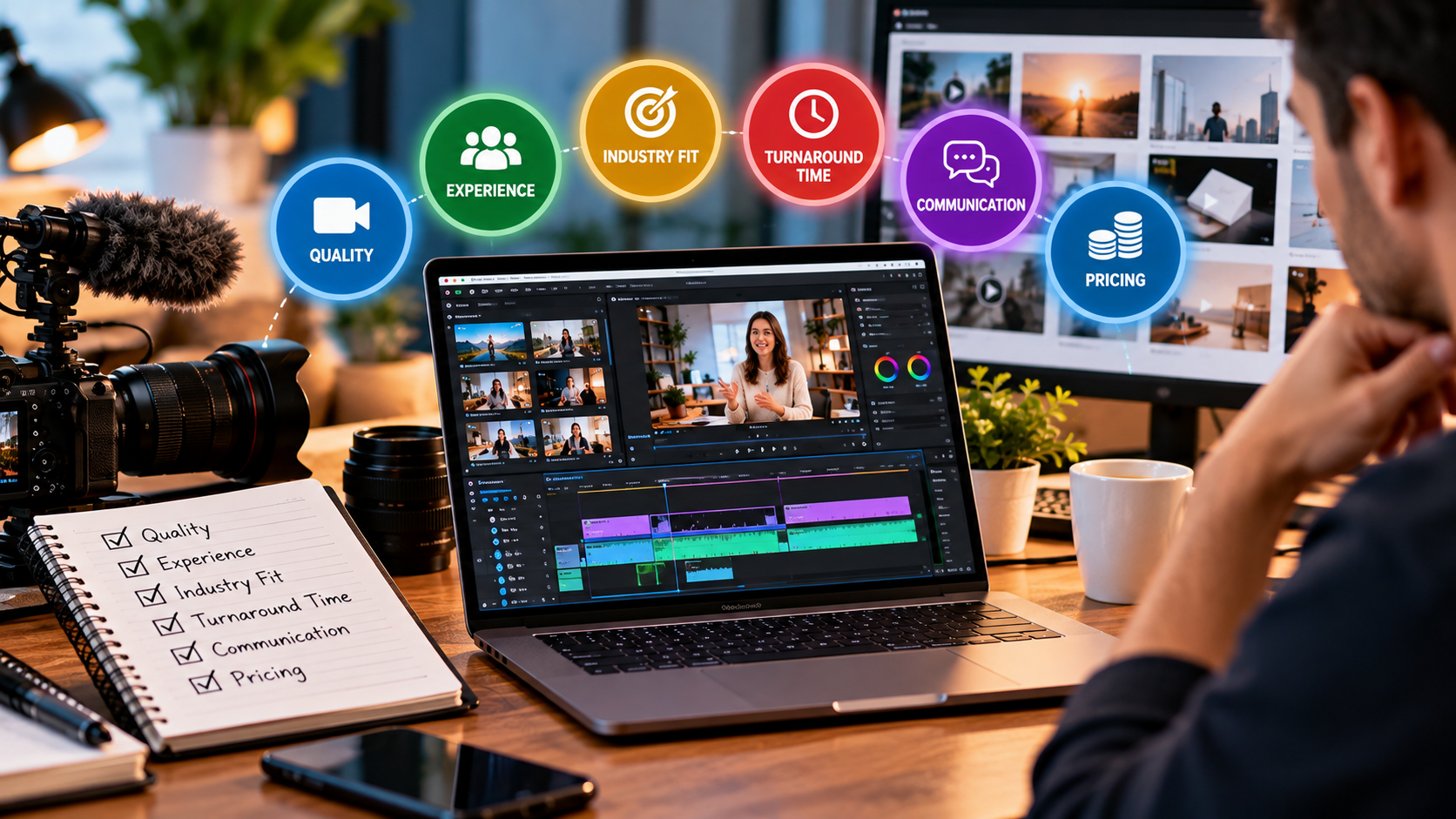
Learning how to choose video editing service for brands starts with understanding what the service actually delivers. A video editing service is a company or team that turns raw footage into a finished, publish-ready video through cuts, color, sound, and graphics. Most brands weigh several options before committing, and the differences between those options are often bigger than they first appear.
The decision usually comes down to more than price alone. A brand publishing weekly social clips has different needs than one producing a few long-form brand films each year. B2B video marketing strategies rarely hold up when the editing partner can't keep pace with the calendar. Getting a handle on how to choose video editing service for brands early on tends to save far more time than untangling a mismatched partnership later.
Defining What a Video Editing Service Actually Does
A video editing service is a company, freelancer, or in-house team that handles post-production, the stage after filming where footage is organized, edited, and exported. Post-production differs from production, which covers the actual filming, and from pre-production, which covers planning a video shoot before any camera rolls. Understanding how to choose video editing service for brands starts with grasping this distinction, since some providers only film and never edit.
Most services fall into three broad categories: project-based, subscription, and freelance marketplace models. Project-based providers charge per video, subscription providers charge a flat monthly rate, and freelance marketplaces let individual editors take on work directly. Each model shapes turnaround, communication, and flexibility in its own way. Learning how to create marketing videos on a consistent schedule usually comes down to picking the model that matches actual output, not the cheapest one.
Social media video editing services often specialize narrowly, focused on short vertical clips rather than long-form brand storytelling. Other providers cover the full range, from explainer videos to testimonials to recurring campaign content. Brands should confirm which category a provider fits before requesting a quote, since a mismatch here causes most of the friction later. Confirming this fit early is one of the more overlooked steps in how to choose a video editing service for brands.
In-House Editing Versus Hiring a Video Editing Service
The right approach depends on budget, internal skill, timeline, and video volume. In-house editing means a staff member handles post-production using internal tools and time. Hiring a video editing service means a business works with trained editors or a dedicated production partner instead.
|
Factor |
In-house editing |
Video editing service |
|
Turnaround time |
Often slower when one person manages several projects |
Usually faster since editing time is dedicated |
|
Consistency |
Can vary with staff workload and available review time |
Usually more standardized across repeated projects |
|
Tools |
May rely on free or entry-level software |
Typically uses professional software and workflow systems |
|
Skill depth |
Often limited for color, sound, or motion graphics |
Frequently includes specialists for technical and creative tasks |
|
Cost structure |
Lower upfront spend but higher internal time demand |
More predictable project cost with less internal workload |
A small brand may start with in-house editing and shift to outside help once quality expectations grow. A team with basic editing skills may keep quick internal updates while outsourcing campaign videos, testimonials, or high-volume social clips. Working through how to choose video editing service for brands at this stage usually means comparing at least two pricing models side by side.
When a growing brand needs a video editing service tied to strategy and repeat production, professional video editing services can help. Staff no longer have to manage every technical step alone. That kind of support becomes more valuable as publishing volume increases. It's usually the clearest signal in how to choose video editing service for brands that outgrow a single in-house editor.
Key Criteria for Evaluating a Video Editing Service Fit
A short list of criteria makes comparing providers far easier than judging a portfolio alone. Turnaround time, communication style, and pricing transparency tend to matter more day to day than any single showreel. That holds whether the need is broad campaign support or narrow video editing services for YouTube. Reviewing this list before the first call keeps the conversation focused on facts instead of impressions.
Brands weighing social media video editing services against full-service providers should confirm the following before signing anything:
- Turnaround window: how long a first draft takes, and whether that window covers business days or calendar days.
- Revision policy: how many rounds of feedback are included, and what counts as a new request rather than a revision.
- Portfolio fit: whether the provider has edited content in a similar niche, tone, or format before.
- Pricing structure: whether the model is per-video, subscription, or hourly, and what triggers extra charges.
- Communication channel: whether feedback happens through a dedicated platform, email, or shared files.
Once these five points are confirmed, a brand can compare quotes on equal footing instead of guessing at what each price includes. This is usually the point where how to choose a video editing service for brands stops being abstract and becomes a short, comparable checklist.
Tracking video content analytics after the first few deliveries shows whether the provider's editing choices actually move watch time and engagement, not just deadlines. Getting this step right is often the difference in how to choose video editing service for brands successfully the first time.
Vetting Questions Before Hiring a Video Editing Service
Vetting a provider takes more than a single sample reel, since a polished demo doesn't guarantee day-to-day reliability. Planning a video shoot around a provider's stated turnaround only works if that turnaround holds up once real deadlines arrive. This vetting stage is where how to choose video editing service for brands turns from research into a real decision. A short set of direct questions during the sales call usually surfaces answers a website won't.
Before hiring, brands should ask each shortlisted provider:
- Who will actually edit the footage, and is that person a dedicated point of contact?
- What happens if the raw footage arrives with audio or lighting problems?
- How are project files stored, and when are they deleted after delivery?
- What counts as an included revision, and what triggers an additional fee?
- Can the provider share two examples from a similar industry or content type?
Vague or evasive answers to any of these questions are a stronger warning sign than an unfamiliar pricing model. According to a recent video marketing survey, a substantial share of businesses now handle at least some production through outside vendors. That trend makes clear, written answers to these questions increasingly standard practice. Anyone still learning how to choose video editing service for brands should treat this question list as a starting point, not a final step.
Brand Consistency and the Role of a Video Editing Service
A video editing service does more than assemble footage into a finished clip. It also supports brand consistency, meaning the same tone, pacing, and visual style carried across every video a brand publishes. That matters more as content volume grows across platforms. A one-off freelancer can produce a strong single video without ever solving this consistency problem.
Brands running video editing services for YouTube alongside social and website content often see the gap most clearly. Each channel can pull footage in a different direction without a shared style guide. Multi-channel programs are usually where how to choose video editing service for brands matters most.
A provider that also understands B2B video marketing strategies can apply the same visual language to a sales explainer, a testimonial, and a social clip. That shared language is part of what separates a reliable content library from a scattered one. It's also a core piece of how to choose video editing service for brands well.
Mistakes Brands Make When Choosing a Video Editing Service
Most mistakes happen when brands prioritize price or speed over fit. A cheap quote that ignores turnaround limits, revision caps, or footage minimums often costs more once those gaps surface mid-project. Rushing the decision to hit a launch date tends to create the same problem later.
A few patterns show up repeatedly. Skipping the sample request and hiring based on a website alone leaves quality entirely to chance. Ignoring a provider's stated revision limit invites conflict once the first feedback round runs long, even with professional video editing services that look reliable. Signing a long subscription before confirming actual monthly output often locks a brand into paying for capacity it never uses. Content marketing research consistently ranks video as the most effective format available to marketers, which raises the stakes when the editing partner behind it underdelivers.
Planning a video shoot with the eventual editor in mind, rather than treating filming and editing as separate decisions, closes most of the remaining gaps. Avoiding these mistakes usually just means slowing the vetting process down by a week or two. A brand that treats how to choose video editing service for brands with the same care as a hiring decision rarely regrets the time spent.
Measuring Success After Choosing a Video Editing Service
Success after hiring a video editing service should be measured against real business outcomes, not just how polished the final export looks. A provider worth keeping should move those numbers, not just deliver on time.
A useful review checks whether viewers stay past the opening seconds, whether captions and text hold up on mobile. It also checks whether the finished video supports a business goal such as inquiries or sales. Audience engagement data shows that shorter video formats consistently draw stronger engagement than longer ones, which gives brands a concrete early benchmark to track.
Video content analytics make these questions answerable instead of guesswork, and a provider willing to discuss the data is usually a stronger long-term fit. Social media video editing services and narrower video editing services for YouTube should be judged on scroll-stopping openings. B2B video marketing strategies built around this kind of ongoing review tend to improve steadily instead of plateauing after the first few projects. How to choose video editing service for brands is rarely a one-time decision once this habit is in place.