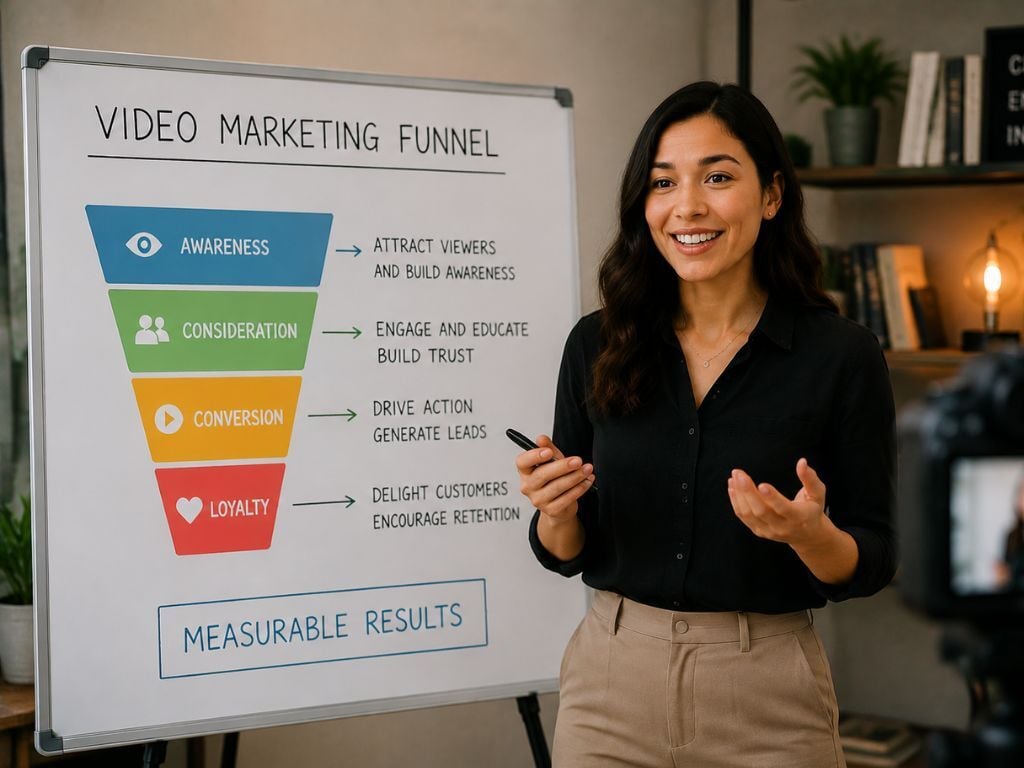

Building a Scalable Video Marketing Funnel for Measurable Results
Video has become one of the most powerful tools in digital marketing, but producing videos alone does not guarantee results. Performance depends on how those videos are structured, distributed, and connected to the audience journey. A video marketing funnel provides the framework needed to turn individual videos into a cohesive system that supports visibility, engagement, and conversion at every stage. Without that structure, even high-quality video content can struggle to deliver consistent returns.
As platforms become more competitive and audiences more selective, brands must think beyond isolated content. Viewers encounter video at different moments in their decision-making process, each with distinct expectations and intent. This blog explores how a video marketing funnel creates alignment between content, platforms, and performance goals. Rather than relying on one-off tactics, this approach focuses on building a system that supports long-term growth and measurable results.
Understanding the Role of a Video Marketing Funnel in Digital Strategy
A video marketing funnel defines how video content supports audiences from initial awareness through final conversion. Instead of treating every video the same, the funnel organizes content around intent, ensuring that messaging evolves as viewers move closer to action. This structure helps brands deliver the right information at the right time, increasing relevance and engagement.
Without a clear video marketing funnel, content strategies often become fragmented. Videos may perform well individually but fail to contribute to broader business objectives. Funnel alignment creates continuity, allowing each piece of content to build on the last, especially when supported by strategic video marketing services. This approach transforms video from a standalone asset into a strategic driver of digital performance.
From a strategic standpoint, the funnel also clarifies priorities. It helps teams understand which metrics matter at each stage and how success should be measured. By anchoring video efforts to a defined funnel, brands gain better control over outcomes and can make more informed decisions about production, distribution, and optimization.
Defining the Four Core Strategies That Power a Video Marketing Funnel
A video marketing funnel performs best when it is built on a clear set of guiding strategies rather than isolated content decisions. These strategies create structure, ensure alignment, and allow video content to support performance goals at every stage of the funnel. Leveraging performance-driven video optimization ensures that strategic decisions are informed by measurable audience behavior rather than assumptions.
- Intent Alignment Across the Funnel: Each stage of the video marketing funnel reflects a different viewer mindset. Aligning content with audience intent ensures that messaging feels relevant and encourages progression rather than disengagement.
- Format and Platform Alignment: Video formats should match how audiences consume content on each platform. Aligning length, layout, and presentation reduces friction and improves retention throughout the video marketing funnel.
- Progressive Storytelling: Videos should build on one another instead of repeating the same message. Progressive storytelling maintains momentum and supports consistent engagement as viewers move through the video marketing funnel.
- Performance-Driven Optimization: Measurement allows the video marketing funnel to improve over time. Tracking engagement and conversion signals helps refine content and strengthen results at every stage.
Together, these four strategies provide the foundation for structuring video content across awareness, consideration, and conversion stages, ensuring the video marketing funnel operates as a cohesive and scalable system.
Mapping Video Content to Awareness, Consideration, and Conversion Stages
An effective video marketing funnel aligns content with the distinct stages of the audience journey. At the awareness stage, video is designed to capture attention and introduce a brand or idea. Leveraging engaging social video frameworks helps ensure awareness-stage content is optimized for fast-scrolling environments and short attention spans.
As audiences move into the consideration stage, video content shifts toward education and trust-building. Explainers, thought leadership, and branded storytelling help viewers understand value and differentiate options. Within the video marketing funnel, this stage is critical for maintaining momentum and reducing drop-off as interest deepens.
At the conversion stage, video supports decision-making. Testimonials, case studies, and product demonstrations reinforce credibility and encourage action. When content is mapped intentionally across stages, the video marketing funnel feels cohesive rather than disjointed. Each video serves a purpose, guiding viewers forward instead of leaving outcomes to chance.
Aligning Video Formats and Platforms Within the Video Marketing Funnel
Format and platform alignment play a significant role in how effectively a video marketing funnel performs. Different platforms support different behaviors, and successful funnels account for those nuances. Short-form videos often perform best in discovery-focused environments, while longer formats are more effective when viewers are actively seeking information. Platform-native design reduces friction and improves accessibility by making content feel intuitive rather than disruptive.
- Short-form videos support top-of-funnel discovery, while long-form content aligns with consideration and decision stages
- Vertical formats, captions, and platform-specific pacing improve accessibility and retention
- Platform-native design helps content blend naturally into user feeds
- Unified format planning ensures consistency across channels
- Strategic alignment strengthens distribution efficiency and overall funnel performance within video content marketing services
When video formats and platforms are aligned within a unified strategy, the funnel becomes more predictable, scalable, and effective at guiding viewers from discovery to conversion.
Using Performance Data to Optimize Each Stage of the Video Marketing Funnel
Performance measurement transforms a video marketing funnel from a conceptual model into a practical optimization system. Each funnel stage serves a different purpose, requiring distinct metrics to accurately evaluate effectiveness and guide improvements, especially when designing videos that convert at the decision-making stage.
|
Video Marketing Funnel Stage |
Primary Objective |
Key Performance Metrics |
Optimization Focus |
|
Awareness |
Capture attention and maximize visibility |
Reach, impressions, watch time, view-through rate |
Improve hooks, pacing, and format to sustain initial attention |
|
Consideration |
Deepen engagement and message retention |
Average watch duration, engagement rate, replays |
Refine storytelling, structure, and informational clarity |
|
Conversion |
Drive action and intent |
Click-through rate, conversions, lead submissions |
Strengthen calls to action and reduce friction |
|
Retention / Advocacy |
Sustain interest and encourage repeat viewing |
Return viewers, completion rate, shares |
Reinforce value, consistency, and audience alignment |
Analyzing how viewers interact with videos at each stage allows teams to identify where attention drops and where momentum builds, revealing when messaging, pacing, or format adjustments are needed and making optimization proactive rather than reactive while creating a more predictable, scalable video marketing funnel that supports continuous improvement and stronger long-term results.
Building a Scalable System Around Your Video Marketing Funnel
Scalability depends on consistency. A video marketing funnel works best when it is treated as a system rather than a series of individual campaigns. Structure, content planning, distribution, and measurement must operate together to support growth without sacrificing quality, with video editing services helping maintain consistency as volume increases.
As video output increases, standardized processes reduce guesswork. Teams can plan content more efficiently, knowing how each asset fits into the broader funnel. This makes the video marketing funnel easier to maintain and adapt as platforms, audiences, and goals evolve.
A scalable approach also supports long-term performance. When systems are in place, improvements compound instead of resetting with each new video. Brands that invest in a structured video marketing funnel are better positioned to grow consistently while maintaining alignment across creative and strategic efforts.
Turning Your Video Marketing Funnel Into a Growth System With FMO Media
A well-executed video marketing funnel is more than a content strategy; it is a competitive advantage. By aligning video with audience intent, platform behavior, and performance metrics, brands can generate engagement that translates into measurable business impact. Videos created within a funnel-driven system are more likely to retain attention, build trust, and support conversion over time.
If your current video efforts feel disconnected or inconsistent, the issue may not be content quality but structure. A video marketing funnel requires intentional design and ongoing refinement. FMO Media helps brands build and scale funnel-driven video systems that support long-term growth rather than short-term wins. For consultations, reach us at (631) 533-9250 or email hello@fmomedia.com or sales@fmomedia.com. With the right framework in place, a video marketing funnel becomes a repeatable engine for performance across your entire digital presence.